

Okrogla miza: Prihodnost izobraževanja in raziskav v dobi umetne inteligence
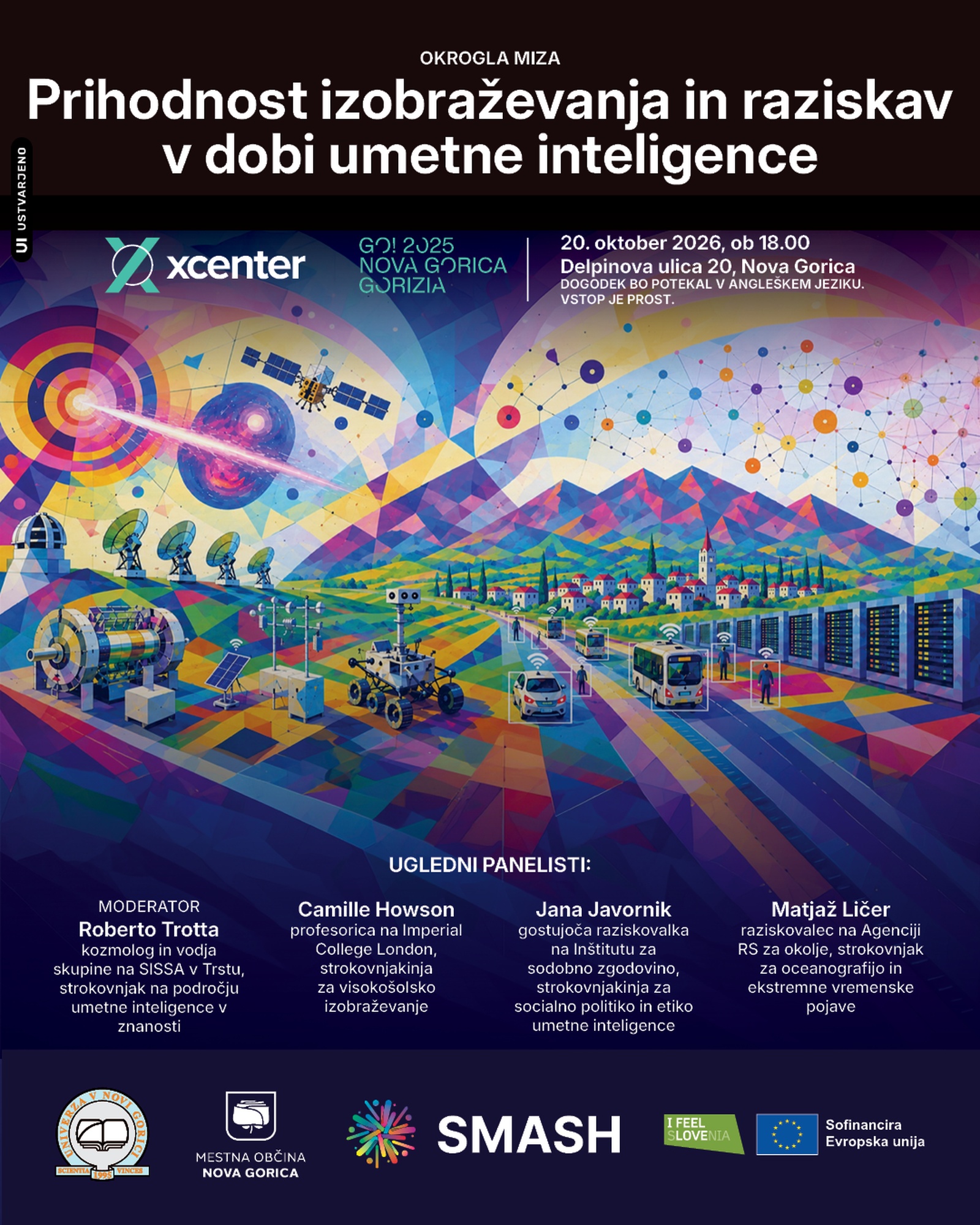
(Si) Univerza v Novi Gorici vas vabi na javno okroglo mizo z naslovom »Prihodnost izobraževanja in raziskav v dobi umetne inteligence«, ki se bo odvila pod okriljem podoktorskega programa SMASH.
Umetna inteligenca pospešeno spreminja način izvajanja raziskav, poučevanja v visokem šolstvu ter ocenjevanja uspešnosti raziskovalcev in raziskovalk. Okrogla miza bo odpirala naslednja vprašanja: Kakšno obliko prevzemata akademsko raziskovanje in poučevanje v dobi umetne inteligence? Kaj pomeni raziskovati – in se izobraževati kot študent ali študentka –, ko ti je domnevno nadčloveško znanje ves čas na dosegu rok?
Na okrogli mizi bodo sodelovali ugledni, mednarodno uveljavljeni strokovnjaki in strokovnjakinje z univerz in podjetij:
- Dr. Camille Howson, profesorica visokega šolstva na Imperial College London, Združeno kraljestvo, strokovnjakinja za raziskovanje visokega šolstva s poudarkom na vključenosti študentov in študentk; študijskih rezultatih in napredku pri učenju; enakosti in socialni pravičnosti; ter kakovosti, uspešnosti in odgovornosti;
- Dr. Jana Javornik, svetovalka za etiko pri projektu SMASH in ustanovna članica UNESCOve mreže Women for Ethics of AI (Ženske za etiko umetne inteligence), gostujoča raziskovalna profesorica na Inštitutu za novejšo zgodovino v Ljubljani, bivša generalna direktorica za visokošolsko izobraževanje, preučuje javne politike, družbeno trajnost in trajnost delovnega okolja, enakost, raznolikost in vključenost (EDI), etiko umetne inteligence, primerjalno metodologijo in prenos znanja;
- Dr. Matjaž Ličer, raziskovalec na Agenciji Republike Slovenije za okolje – ARSO, strokovnjak na področju oceanografije, onesnaževal, aplikacij strojnega učenja v raziskavah ekstremnih vremenskih pojavov.
Dogodek bo povezoval dr. Roberto Trotta, kozmolog, vodja skupine za teoretično in znanstveno preučevanje znanosti o podatkih na Mednarodni šoli za višje študije (International School for Advanced Studies – SISSA) v Trstu, Italija, kjer je tudi direktor Interdisciplinarnega laboratorija. Je avtor več poljudnoznanstvenih knjig in uveljavljen strokovnjak v astrofiziki, znan po kritičnem preučevanju vloge in vpliva umetne inteligence v znanstvenem raziskovanju.
Okrogla miza bo potekala v angleškem jeziku. Vstop je prost.
(Eng) The University of Nova Gorica invites you to a public roundtable entitled “The Future of Education and Research in the Age of Artificial Intelligence,” held as part of the SMASH postdoctoral programme.
Artificial intelligence is rapidly transforming the way research is conducted, higher education is taught, and researchers’ performance is evaluated. The roundtable will explore the following questions: How are academic research and teaching evolving in the age of artificial intelligence? What does it mean to conduct research – and to learn as a student – when supposedly superhuman knowledge is always at your fingertips?
The roundtable will bring together distinguished, internationally recognised experts from universities and industry:
-
Dr Camille Howson, Professor of Higher Education at Imperial College London, United Kingdom. She specialises in higher education research, with a focus on student engagement, learning outcomes and progress, equality and social justice, as well as quality, performance and accountability.
-
Dr Jana Javornik, Ethics Advisor to the SMASH project and a founding member of UNESCO’s Women for Ethics of AI network. She is a Visiting Research Professor at the Institute of Contemporary History in Ljubljana and a former Director-General for Higher Education. Her research focuses on public policy, social sustainability and sustainable working environments, equality, diversity and inclusion (EDI), AI ethics, comparative methodology, and knowledge transfer.
-
Dr Matjaž Ličer, a researcher at the Slovenian Environment Agency (ARSO), specialising in oceanography, pollutants, and the application of machine learning to research on extreme weather events.
The event will be moderated by Dr Roberto Trotta, a cosmologist and Head of the Group for the Theoretical and Scientific Study of Data Science at the International School for Advanced Studies (SISSA) in Trieste, Italy, where he also serves as Director of the Interdisciplinary Laboratory. He is the author of several popular science books and an established expert in astrophysics, known for his critical examination of the role and impact of artificial intelligence in scientific research.
The roundtable will be held in English. Admission is free.
